

Jon has played a pivotal role in shaping the world’s most disruptive marketing technology platforms, with a focus on thought leadership, category creation, and strategic go-to-market.
Jon is currently laying the groundwork for his next start-up. In his most recent role as the CMO of Demandbase, Jon helped transform how B2B companies go-to-market. He was previously the CEO and founder of Engagio, which merged with Demandbase in June 2020. Prior to that, he co-founded Marketo, the leading marketing automation platform, where he served as the CMO and played a key role in helping the company achieve an IPO and category leadership.
In addition, Jon also serves as an independent board member, providing guidance to companies in refining their company strategy and go-to-market approach. Currently, Jon holds positions on the boards of AtData and Puppydog.io and he previously served as a board member at Scripted.
Jon is a frequent keynote speaker and author of several books, including Demandbase's Definitive Guide to ABM/ABX and Marketo’s Definitive Guide to Marketing Automation. He was named Most Influential Marketing CEO of the Year by the Corporate Excellence Awards, one of the 10 Most Influential Tech Marketers in the world by B2B Marketing, and a Top 10 CMO for companies under $250M by the CMO Institute.
Jon holds a bachelor’s degree in physics from Harvard and an MBA from Stanford. He continues to be a driving force in the industry, inspiring and teaching marketers around the world with his innovative ideas and unparalleled expertise.
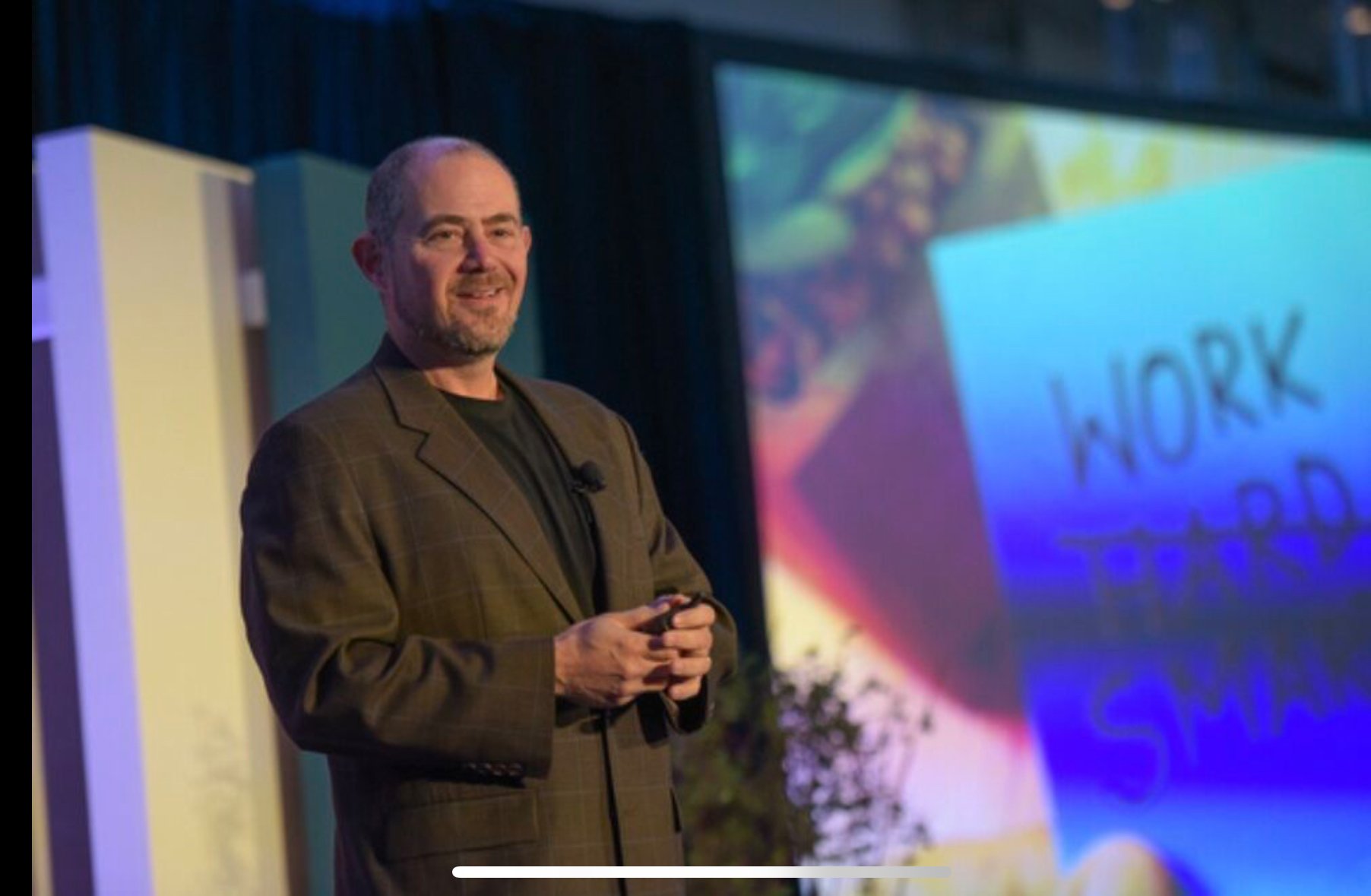
Thought leader and evangelist, speaker at conferences including Dreamforce, MarketingProfs B2B, MarketingSherpa, Marketing Operations Executive Summit, OMS, and the Marketing Nation Summit.
List of selected selected speaking engagements.
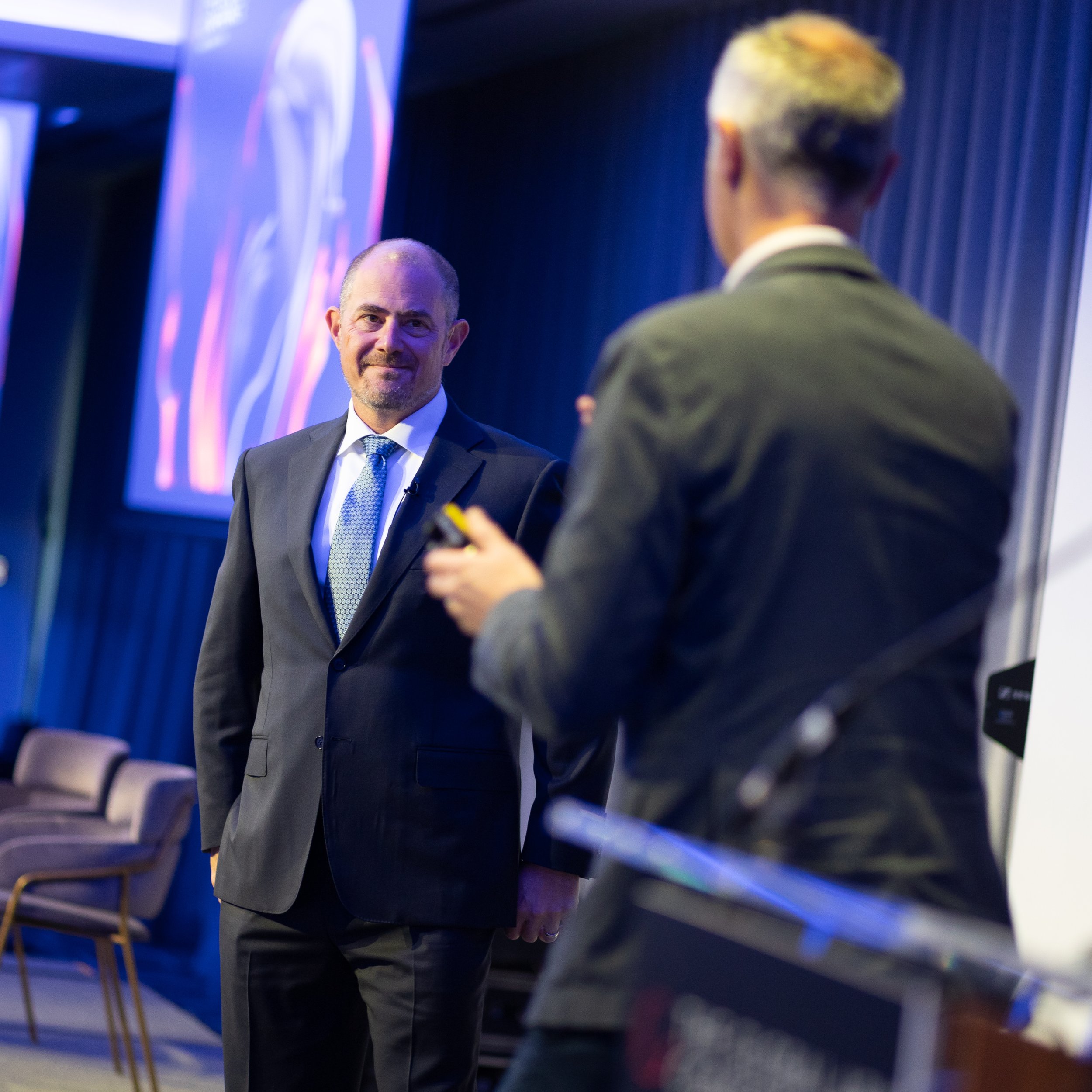
Thought leader and evangelist, speaker at conferences including Dreamforce, MarketingProfs B2B, MarketingSherpa, Marketing Operations Executive Summit, OMS, and the Marketing Nation Summit.
List of selected selected speaking engagements.
The way we’ve been generating pipeline doesn’t work anymore. We're not building relationships — we're burning them.
Here’s a short 4.5 minute video with the highlights from a virtual keynote I gave at the FullFunnel Summit 2025, where I unpacked why our current marketing model isn't working, and what marketers can do about it.
Two forces are colliding in B2B go-to-market: the decline of the traditional playbook and the meteoric rise of AI.
In 2006, we founded Marketo and I helped create that traditional playbook — the one built on MQLs, marketing automation, and tracking every click. For years, it worked brilliantly… until it didn't.
Now, the “gum ball machine” approach to marketing (“budget in, MQLs out”) has become unsustainable. Buyers are burned out by relentless outreach, and trust is at an all-time low. It’s time to reframe marketing’s role in revenue and lean into brand-building as a long-term differentiator.
At the same time, AI agents are reshaping how we work and buy. They’re handling repetitive tasks like qualifying leads and building campaigns, and helping us make purchases by filtering and summarizing information. In this world, experiences that can't be filtered or summarized will become marketing's new currency.
These two trends are driving the most profound transformation in B2B marketing since the advent of marketing automation.
And they work together. As AI finally delivers on the promise of “automation” in marketing automation, it will free us to focus on the strategic, creative work that truly moves the needle. Put another way, if AI can handle the "-ing" in marketing, then we can focus on the "market": understanding our buyers, crafting compelling narratives, and building memorable experiences.
This shift is at the heart of my 11 predictions for how B2B will evolve in 2025 and beyond.
Here's a sneak peek:
1. Companies will slowly break from their "gumball machine" MQL addiction 🍬
2. CMOs will work to reframe marketing's role in revenue 📈
3. Marketers will rebalance budgets toward brand 🌟
4. AI agents will gain early real traction in the enterprise 🤖
5. MOps teams will use AI to trade tactical tasks for strategic impact 👩💻
6. AI will start to replace junior sales roles but augment strategic sellers 🤝
7. Companies will adopt AI SDR agents — but automated cold prospecting will fall flat ❄️
8. Seat-based pricing will give way to value-based models 💺
9. Agents will begin to transform how we buy — and how we go-to-market 🛍️
10. Experiences, relationships, and original content will stand out as AI filters out traditional marketing 🎉
11. Marketing automation will be reimagined for the AI era 🚀
Introducing Atomic Buying Journeys – a model that views your brand as the nucleus of an atom and your customers as electrons orbiting in different energy states.
As B2B marketers, we're always searching for new ways to understand and engage our customers. We've gone from megaphones to magnets, from campaigns to conversations, from funnels to flywheels. What if the next analogy came from Physics and Chemistry?
In this model, your brand sits at the center as the nucleus. Around it orbit your customers and prospects in different shells, each representing a stage in the customer lifecycle.
This model flips our traditional thinking on its head. Instead of a funnel where customers fall through stages, we now have a model where moving customers outward — towards advocacy — requires energy input.
“Marketing is not a gumball machine.”
Our addiction to MQLs has led us astray. We've taught people to view marketing as a "budget in, leads out" machine, and became hooked on the sugar rush of MQLs.
By bombarding buyers with unwanted emails and aggressive SDR tactics, we're not building relationships — we're burning them. These short-term tactics might boost MQLs, but they erode trust and hurt the customer experience.
The result over time? Missing pipeline, low SDR productivity, high CMO turnover, and poor alignment.
It's time for a new approach. One that shifts from quantity to quality, from quick wins to long-term relationships. One that treats buyers as people and seeks to help them succeed.
This new approach starts with the fundamentals: product-market fit, positioning, and brand. Get these right, and even an average marketing team can shine. Get them wrong, and no amount of heroic execution will deliver results.
Product-market fit: Your product satisfies a strong market demand and solves an urgent problem.
Positioning: You're differentiated and own a distinct place in the buyer's mind.
Brand: It's how people feel about you when you're not in the room. It's why they choose you over a cheaper alternative.
Driving this change requires a new kind of CMO. One who excels at collaborating with peers, who elevates marketing from a tactical lead gen function to a strategic driver of company growth: The Chief Market Officer.
It also requires new metrics. Brand awareness and reputation. Account engagement. Shared pipeline goals. NRR and NPS. Metrics that align with the new realities of B2B buying.
The old martech stack must evolve too. We need AI-powered solutions that support personalized, adaptive customer experiences while providing marketers with new efficiency and insights.
Are you feeling like your marketing has become less effective? Like your digital, content, and email campaigns are not creating the same amount of pipeline as they have in the past?
The marketing playbooks we’ve used for years just aren’t working. Buyers are numb to our traditional tactics.
In this post, I explain why nothing works anymore and share the new playbook, filled with go-to-market techniques that are working today, including conditioning the market to your solution and engaging the right accounts at the right time with the right plays.
I'm currently the Chief Executive Office of Engagio, the #1 B2B marketing
engagement software that combines the best of lead- and account-based
marketing to help marketing and sales departments work as a team.
I'm currently the Chief Executive Office of Engagio, the #1 B2B marketing
engagement software that combines the best of lead- and account-based
marketing to help marketing and sales departments work as a team.
I spent the break grading my 2025 B2B predictions. Overall Grade: B.
The pattern that emerged: I was generally right about direction, but too optimistic about speed. Often because I wanted these changes to happen.
WHAT I GOT RIGHT
Cold email is dying — reply rates collapsed to 1-5%. AI SDRs became "spam cannons that burn through your TAM." Seat-based pricing is giving way to consumption models (67% of SaaS companies now use them).
MQL criticism hit critical mass, and the brand investment conversation shifted exactly as predicted.
AI agents moved beyond proof-of-concept: 23% of organizations are scaling them, and usage surged 233% in six months.
WHAT I UNDERESTIMATED
The velocity of AI adoption in sales — 75% of reps now use AI tools, way higher than my 25% prediction.
The explosion of B2B influencer marketing and partnership ecosystems. 69% of SaaS leaders are increasing partnership investment.
How quickly Answer Engine Optimization became the top topic at every CMO dinner.
WHAT DIDN'T HAPPEN
The ground-up reimagining of marketing automation platforms. We got incremental AI features bolted onto legacy systems, but these are still fundamentally rule-based platforms with LLM wrappers, not AI-native orchestration engines.
True autonomous buying agents. While 90% of buyers now use ChatGPT for research and 72% encounter Google AI Overviews, high-stakes purchases still require direct human validation.
THE HARDEST GRADE: D
I predicted CMOs would reframe marketing's role from tactical execution to strategic market leadership.
The opposite happened.
Only 14% of CEOs view their CMO as effective at market shaping. 84% of CMOs report high strategic dysfunction. 48% experience high burnout.
This one stings because it matters the most. But it also creates the biggest opportunity for those willing to lead the transformation.
WHAT I LEARNED
Aspiration doesn't equal prediction. I wanted CMOs to reclaim their strategic seat. I wanted marketing teams to escape the MQL hamster wheel. I wanted MAPs reimagined from AI-first principles. Wanting something badly can blur the line between forecast and wishful thinking.
The gap between LinkedIn and reality remains wide. Everyone talks about being customer-first, tracking buying groups, and investing in brand. Far fewer are actually restructuring their organizations and budgets around these principles.
And technology moves faster than adoption. AI agents exist and work, but organizations need time to integrate them, build guardrails, and figure out where humans add most value. Having the capability and scaling it across an enterprise are different problems.
LOOKING AHEAD
I'm deep into my 2026 predictions now, armed with this scorecard. They'll publish in a few weeks.
This time, I'm being more careful to separate what should happen from what will happen. The AI transformation is real. The shift from MQLs to buying groups is happening. Brand investment is gaining traction.
But these are multi-year transformations, not annual pivots. The gap between what's possible and what's practical remains wide.
What patterns are you seeing as we head into 2026?